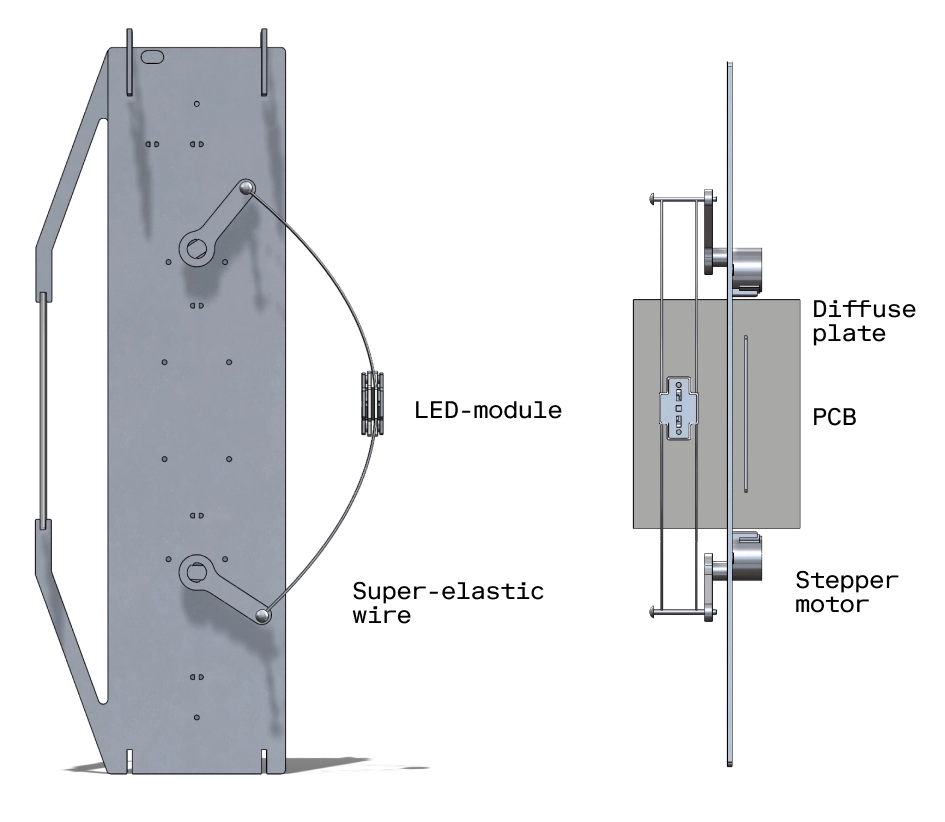
20 repeating elements
Stepper motors, LED and super-elastic wires
Aluminium structure
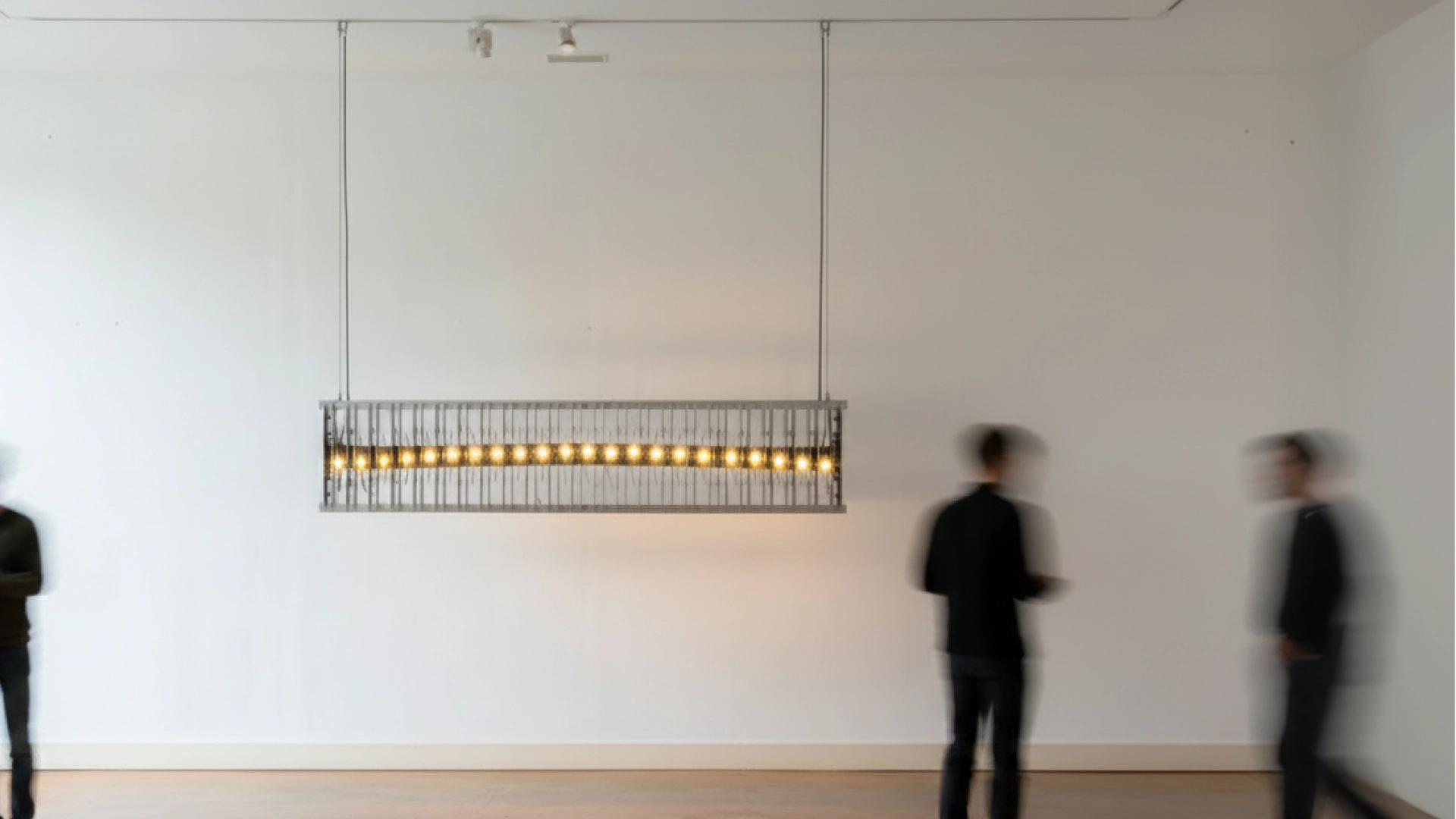
Continuum is the result of my graduation project for the MSc Integrated Product Design at TU Delft. In collaboration with Lumus Instruments, I designed and manufactured a kinetic light installation. The installation consists of twenty repeating elements, each moving a double-sided LED through a two-dimensional plane by means of two stepper motors and super-elastic wires. Through the repetition and interaction of many simple movements, the installation produces slowly evolving wave-like patterns alongside a complementary shadow projections.
Repetition : Minimal Variation : Continuous Transformation
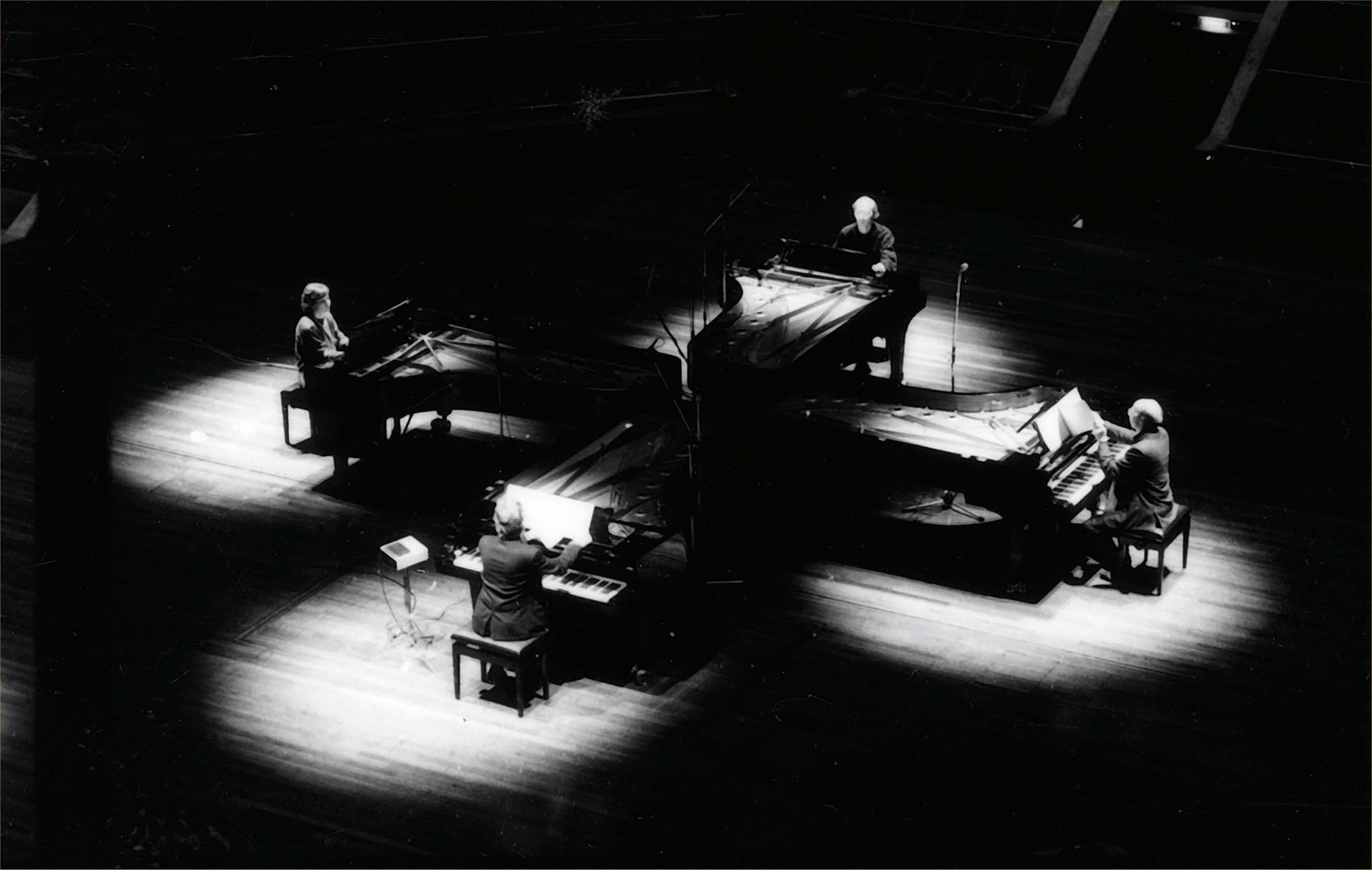
Conceptually, the installation builds on elemental repetition and gradual change: each element performs a single constrained motion, and complexity emerges through the repeated interaction of structure and light. This idea is directly inspired by Simeon ten Holt's Canto Ostinato, a musical composition built from short repeating phrases that shift over time, gradually building a continuously evolving whole out of simple, constrained material. Continuum translates that same principle into light and motion.
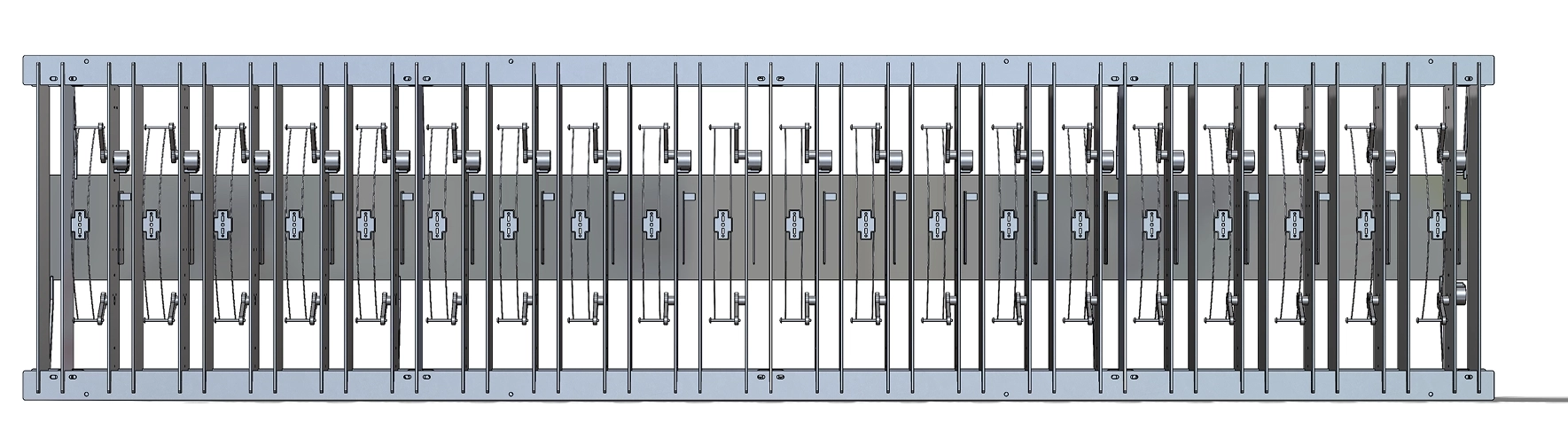
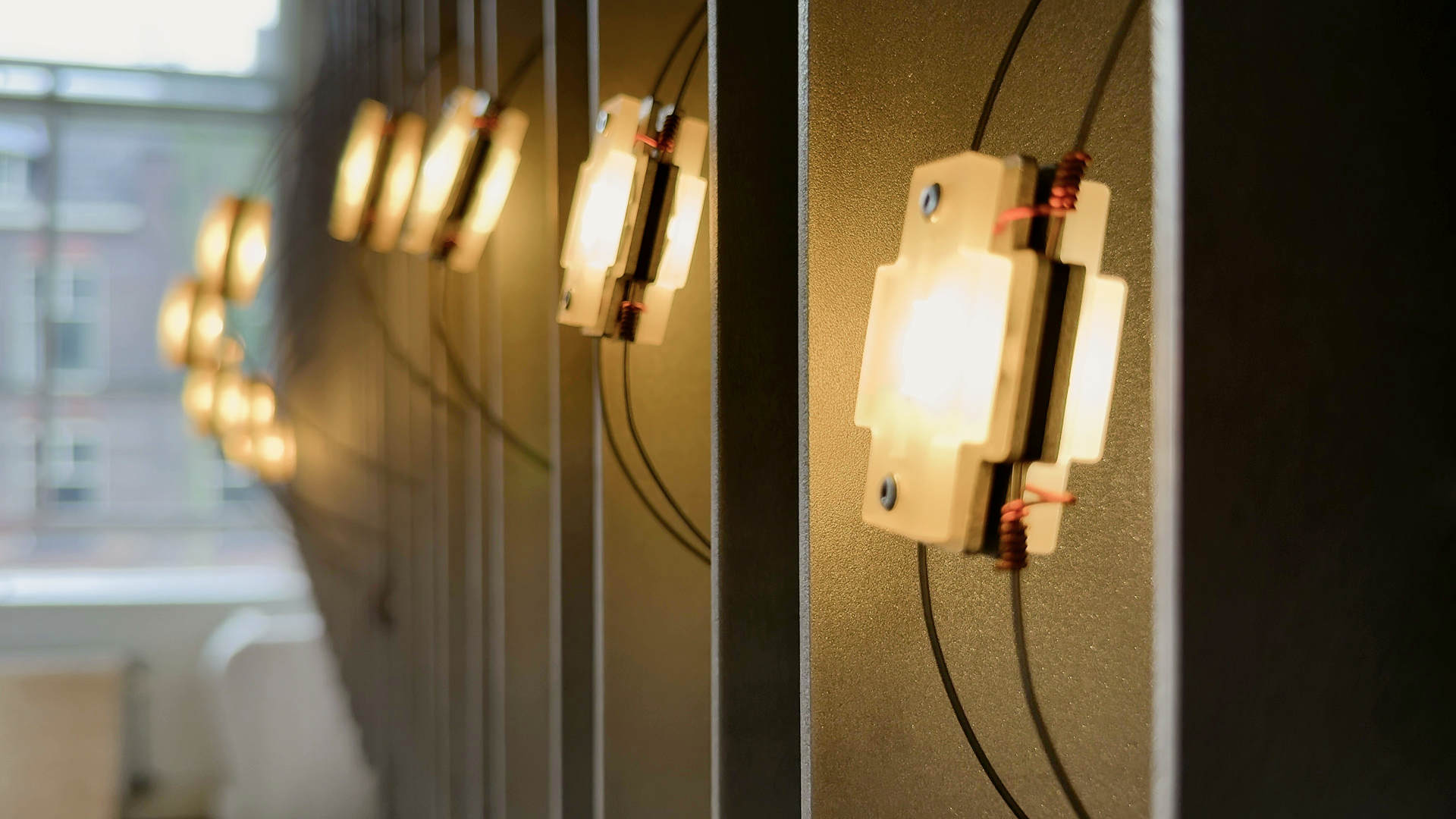
Each LED is suspended by two super-elastic wires, a material that bends and flexes easily and springs back into shape. By varying the relative speed of the two stepper motors, the tension and position of the wires shift, moving the light within a two-dimensional plane. A dark diffuse panel mounted behind the array creates two readings at once: on the front, individual points of light combine into slowly evolving wave-like patterns; on the back, the same movement is visualised as shifting shadow projections. Every element is driven by an Arduino Nano on a custom-designed PCB, so the whole array follows one coherent set of motion rules.